For Landowners

Your land can earn like an asset. Because it is one.

Open ground near a substation is the scarcest input in this business. Not sunlight, which falls on everyone, and not capital, which is abundant and bored. Land with a wire running past it. We lease it on long terms at fixed rent, and we pay for every study it takes to find out whether yours qualifies. If it does not, we say so, which in this industry passes for eccentricity.

What We Build on Land

Three kinds of project, one kind of tenant.

I.

Community solar

One to five megawatts, interconnected at distribution voltage, serving subscribers across the utility's territory who could never host panels themselves. Most of our states buy this output under long programme contracts, which is precisely what lets us pay a fixed rent for twenty years and sleep soundly.

II.

Utility-scale solar

Larger arrays selling into a utility offtake or a merchant market. These want scale, a nearby transmission or sub-transmission tie, and a landowner who is not in a hurry. The interconnection queue moves at its own pace; the option payments do not wait for it.

III.

Standalone battery storage

Storage is sited for the grid, not for the sun. A few level acres beside the right substation can carry a project that two hundred acres in the wrong place cannot, and a battery's footprint is compact enough to leave most of a parcel exactly as it was.

What We Look For

A minute with this list will tell you whether to write to us.

None of these is a hard rule, and grid conditions decide more than acreage ever will, but the parcels that work tend to share a few traits.

Acreage
Ground arrays begin to work at several usable acres and improve from there; storage can be far more compact. Larger parcels open the door to community-solar and utility-scale configurations.
Grid proximity
Distance to three-phase distribution lines or a substation is often the single economic fact about a site. If you can see the wires from the property, say so; it saves everyone a month.
Terrain & exposure
Level or gently sloping ground, few wetlands, little shade, and a road a crane can use.
Current use
Row crops, pasture, fallow ground and brownfields are all candidates. Prime farmland attracts more scrutiny in some of our states than in others, and we will tell you plainly which one you are standing in.
Title & encumbrances
The authority to grant a long-term lease or easement, and a clear view of mineral rights, conservation easements and any mortgage requiring lender consent. We handle the title work; you need only the power to sign.

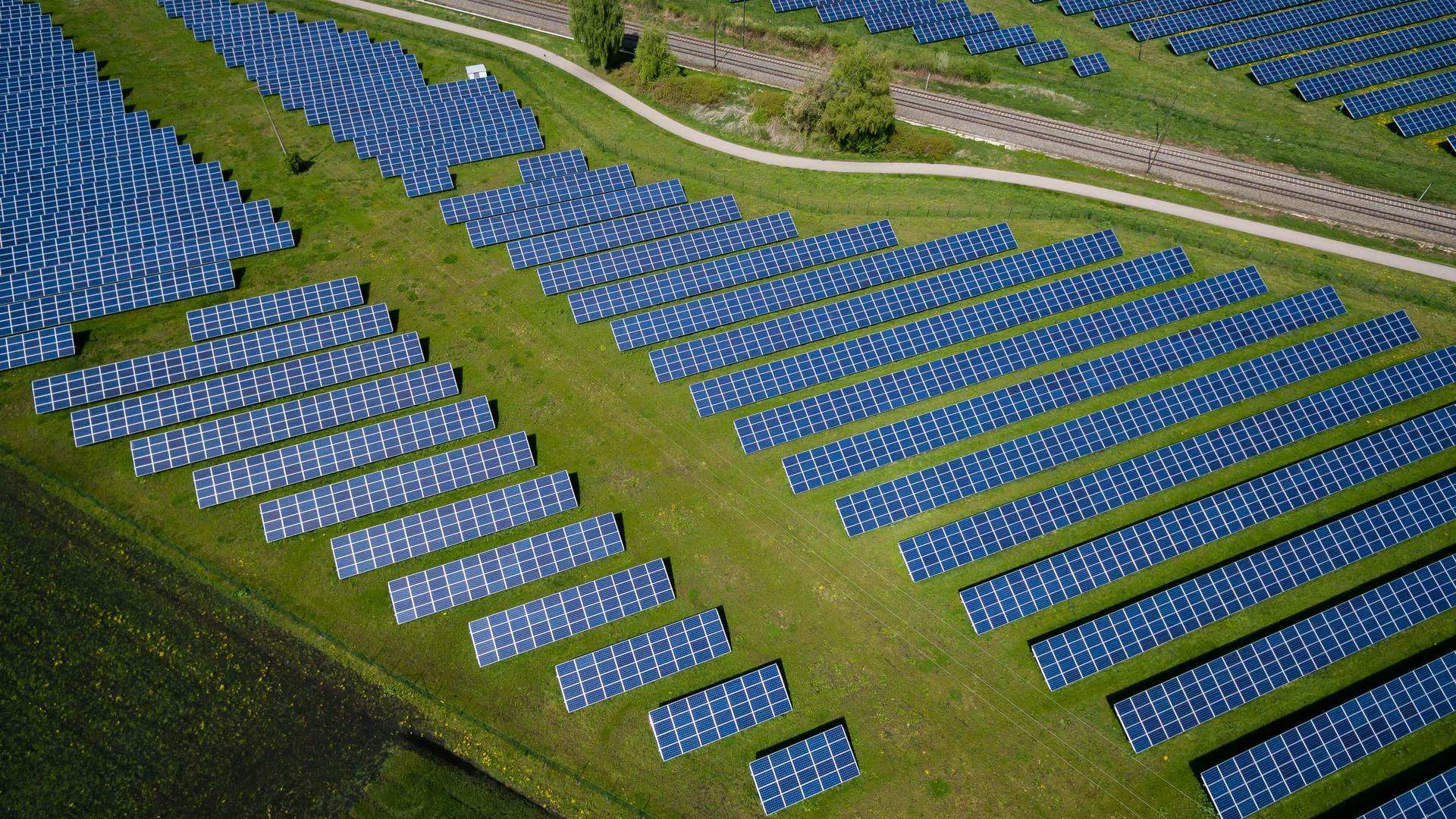
The Ground Goes On Being Ground

A lease, not a conversion.

Panels sit on posts driven into the earth, not on a slab. Sheep have grazed beneath arrays since the first ones went up in Bavaria, and the arrangement suits both parties: the flock takes the shade and the forage, the project gets its vegetation managed without a mower. Pollinator plantings between and beneath the rows are now routine in several of our states and occasionally carry an incentive of their own.

Nothing is poured and nothing is paved. The array is a tenant on the surface of the parcel, and the character of the ground underneath it does not change for the life of the lease.

How It Works

Four steps, none of them at your expense.

  1. Submit the parcel

    An address or parcel number, the acreage, and anything you know about the wires nearby. You get a straight answer, including "no," rather than a sales funnel with your name on it.

  2. Desktop feasibility

    Grid capacity, land characteristics and the programme economics of your jurisdiction, assessed at our desk and at our cost. Nothing signed, nothing owed.

  3. Option & diligence

    If the parcel works on paper we sign an option, and you are generally paid from that day forward. Surveys, environmental and cultural studies, interconnection applications and permits are funded entirely by us.

  4. Lease, construction, and decades of rent

    The option converts to a long-term lease at fixed rent with scheduled escalations. We build, operate, insure and maintain the project for the life of the lease, at no cost to you.

The Fine Print, in Plain Language

What a Phæthon lease asks of you, and what it does not.

No cost to you
Studies, engineering, legal work, interconnection deposits, permitting. Ours, at every stage.
No obligation to consume
Hosting the project does not make you its customer. The power is sold elsewhere. You are the landlord, full stop.
Your counsel welcome
We draft in plain English and expect your lawyer to read it. A lease that cannot survive a careful reading was never meant to be understood, and you should ask why.

Start Here

Send us the parcel. We will tell you what it is worth to us.

Submit a parcel